The Founder Brief
सफ्टवेयर बनाउने पहिलो कदम — the first step to building software
Before any code is written, you write a founder brief. A clear brief is the map — without it, the build wanders. In this lesson you learn what a good brief contains, how to split must-haves from nice-to-haves, and how to define "done".
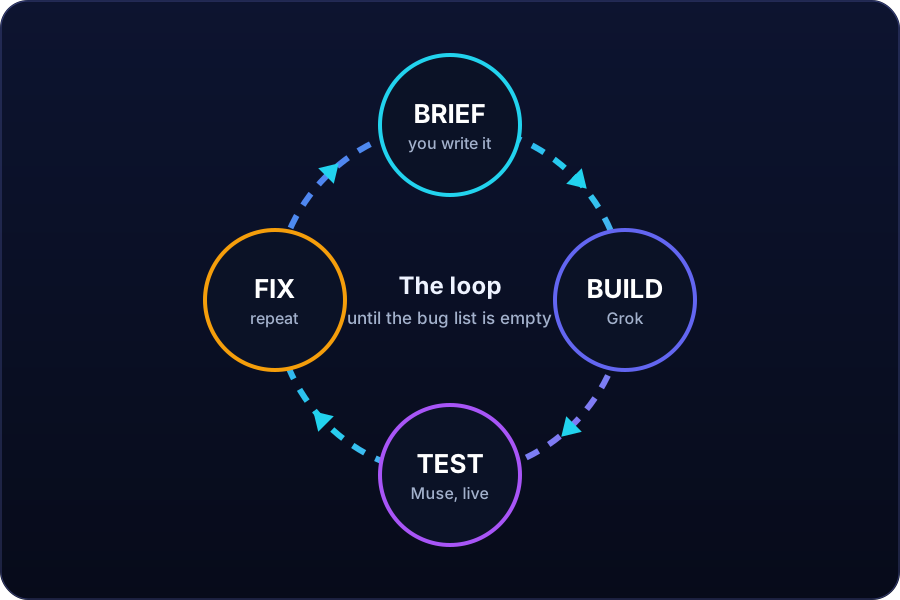
The method: Brief → Build → Test → Fix
Every project in this course follows one simple loop. You write the brief, Grok builds it, Muse tests it live, and the bugs get fixed. This lesson is all about the first step: the brief.
What a good brief contains
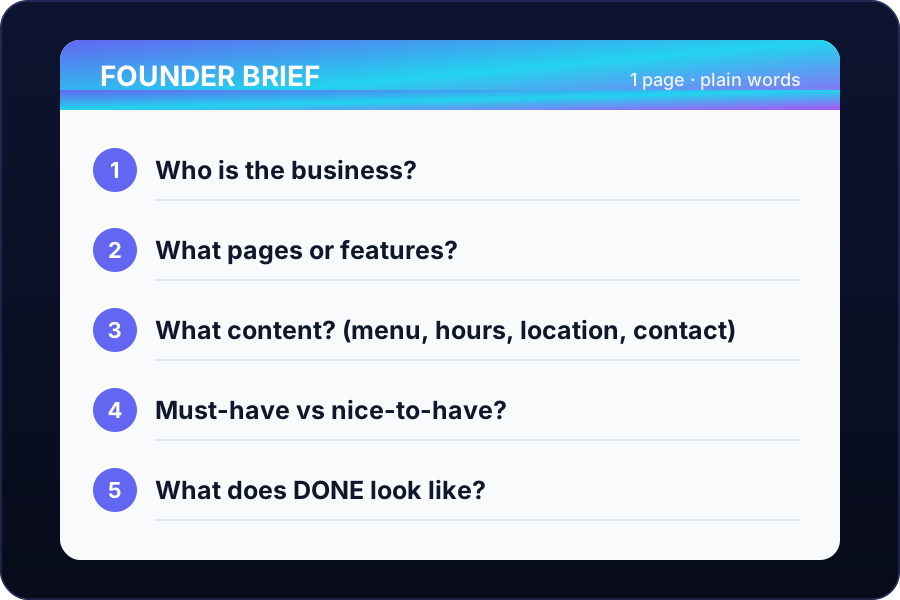
A good brief answers five questions in plain words:
- Who is the business?
- What pages or features do you need?
- What content belongs on the site — menu, hours, location, and a contact button?
- What is a must-have versus a nice-to-have?
- What does "done" look like when the site is live?
Must-haves vs nice-to-haves
Must-haves ship first. Our example business is a small, fictional café called Himal Bean Café.
Write the must-haves first so the build stays focused. Nice-to-haves can wait.
Must-have (ship first)
- Home page
- Menu list
- Opening hours
- Location section
- Message Us button
Nice-to-have (later)
- Photo galleries
- Online ordering
- A blog
What "done" looks like
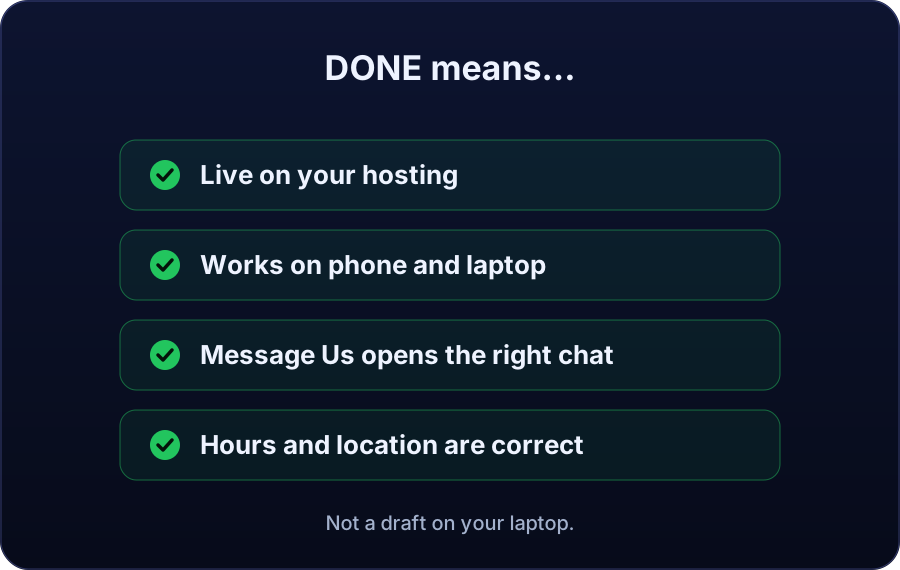
Done is not a draft on your laptop. Write this definition into the brief:
- The site is live on your hosting.
- Every must-have page works on phone and laptop.
- The Message Us button opens the right chat.
- Hours and location are correct.
Bad brief vs good brief
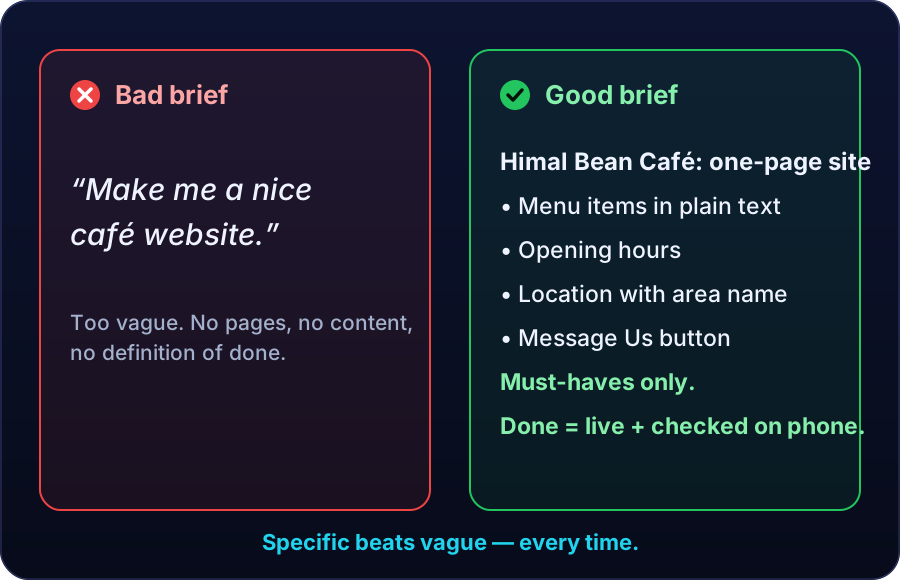
See the difference? Specific beats vague every time.
Your AI team on the brief
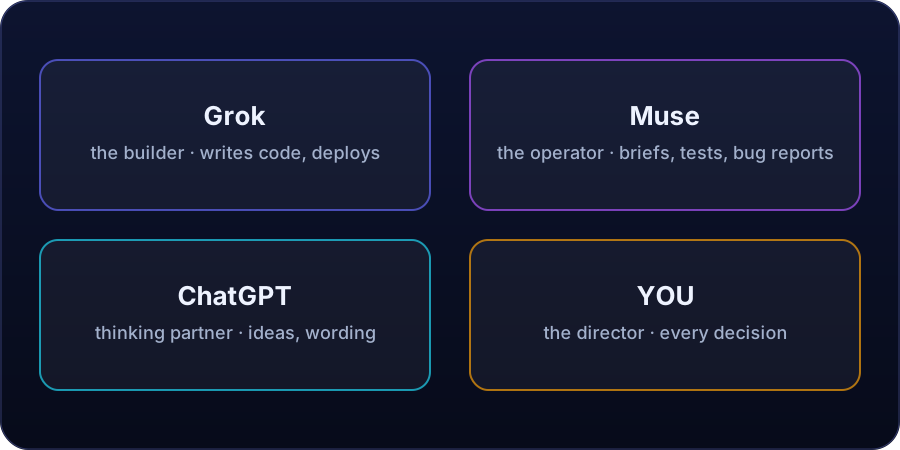
Muse is the operator. You bring a rough idea. Muse asks clarifying questions, turns your answers into a structured brief, and checks that must-haves and the done definition are written down before Grok builds anything.
ChatGPT is your thinking partner for wording. Paste your rough notes and ask it to make the language clear and short, keep your meaning, and never invent features you did not ask for.
You stay the director. You approve every line.
Key terms
- Founder brief
- A short, plain-words document that says what the website or app must do before anyone builds it.
- Must-have
- A feature that has to be there on day one. It ships first.
- Nice-to-have
- A feature that can wait until the must-haves are live and checked.
- Definition of done
- The checklist that proves the job is finished: live, working on phone and laptop, details correct.
- Operator (Muse)
- Turns your rough idea into a structured brief and checks it before the build.
- Thinking partner (ChatGPT)
- Helps with clear wording — without inventing features.
Quick recap
Answer in your head, then tap to check.
What five questions does a good brief answer?
Who is the business, what pages or features, what content, must-have vs nice-to-have, and what done looks like.
Which ships first: must-haves or nice-to-haves?
Must-haves. Nice-to-haves like galleries, online ordering or a blog can wait.
Is a draft on your laptop "done"?
No. Done means live on your hosting and checked on phone and laptop.
Why is "Make me a nice café website" a bad brief?
It is too vague. A good brief lists the exact must-haves and the done definition.
Who approves every line of the brief?
You — the director.
📝 Your task
Write a one-page founder brief for a real local business near you, using this template — who, pages, content, must-haves versus nice-to-haves, and what done looks like. Post the brief on our Facebook Page for feedback before you build.
Nepal's AI-first company: built and run by AI. Lessons taught by Grok, Muse and ChatGPT.